
You advertise one service
The visitor sees the exact offer from the ad instead of searching through a large website.
A focused page for one offer, one audience and one clear conversion action. Built to support paid traffic and measurable enquiries.
We define the page scope, analytics and integrations before development starts. A short description of the task is enough for the first conversation.
The page continues the ad message, answers key questions and sends the enquiry into the business workflow.
A landing page works best when the business has one concrete offer and one clear source of attention.
The visitor sees the exact offer from the ad instead of searching through a large website.
A focused page can explain the value and test demand before a larger product is built.
The main website remains broad while the campaign gets its own focused customer journey.
The offer gets its own conditions, arguments and target action without competing messages.
A focused page can validate demand before the business invests in a more complex digital product.
One service and one page are not enough by themselves. The result depends on how accurately the page continues the campaign message and helps the visitor make a decision.
First we define the decision logic. Design and development come after the offer, customer questions and next step are clear.
What the customer is actually getting
Who needs it and what matters to them
Where the visitor came from and what they already saw
What must be explained before a decision
Which facts support the business claim
What the right next step is now
Each principle should solve a specific customer question. Terminology only matters when it supports clear work.
After the click, the visitor should immediately recognise the promise from the ad.
Explain the offer through the situation and result the customer wants, not through a long feature list.
The page follows how a buyer evaluates the offer rather than the company’s internal presentation order.
Price, scope, risk and conditions appear at the point where the visitor is likely to ask about them.
Projects, facts and claims should support the decision and remain grounded in real evidence.
CTA and forms should ask only for what is needed to start the conversation.
The page does not stop at the submit button. The enquiry has to reach the correct channel and the team needs to know what happens next.
The ad creates an expectation
The first screen confirms the offer
The page explains the decision
Arguments answer the main questions
Proof reduces perceived risk
The CTA offers a clear next step
The form or messenger turns interest into an enquiry
The business receives and handles the enquiry
Where required, the form can connect to notifications, CRM or another agreed working system.
Imagine a company selling custom kitchens. The buyer needs to understand the offer, process and trust signals in a logical sequence.
The structure answers questions as they appear instead of asking for an enquiry before the visitor has enough information.
A kitchen designed for the room with a clear production process
What the customer receives and how the project works
Which room, task and budget the offer is designed for
Real projects, materials and working conditions
Measurement, delivery, installation and warranty questions
Request an estimate or arrange a measurement
The final scope is agreed before development. Research, content, design and functionality depend on the task.
You provide the facts, conditions, product details and industry expertise. KAMOZA helps identify what matters, structure the page and shape the customer argument. Commercial copy refinement can be included in the agreed scope.
What you sell, who it is for, where traffic will come from, what materials already exist and which action you want from the visitor. A finished technical specification is not required.
Choosing between one focused page and a larger website? Compare website formats for business.
These examples show KAMOZA work with structure, commercial flow, design and implementation.
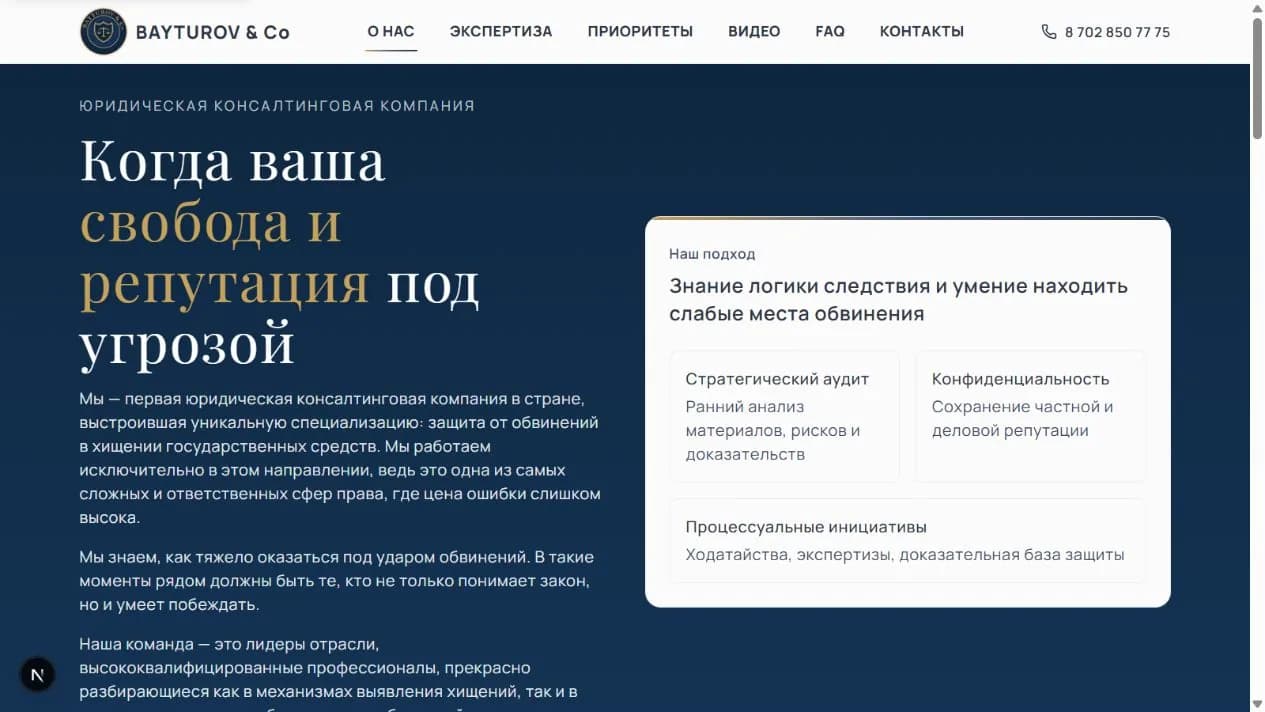
A narrow professional specialisation with direct argumentation and a clear route to contact.
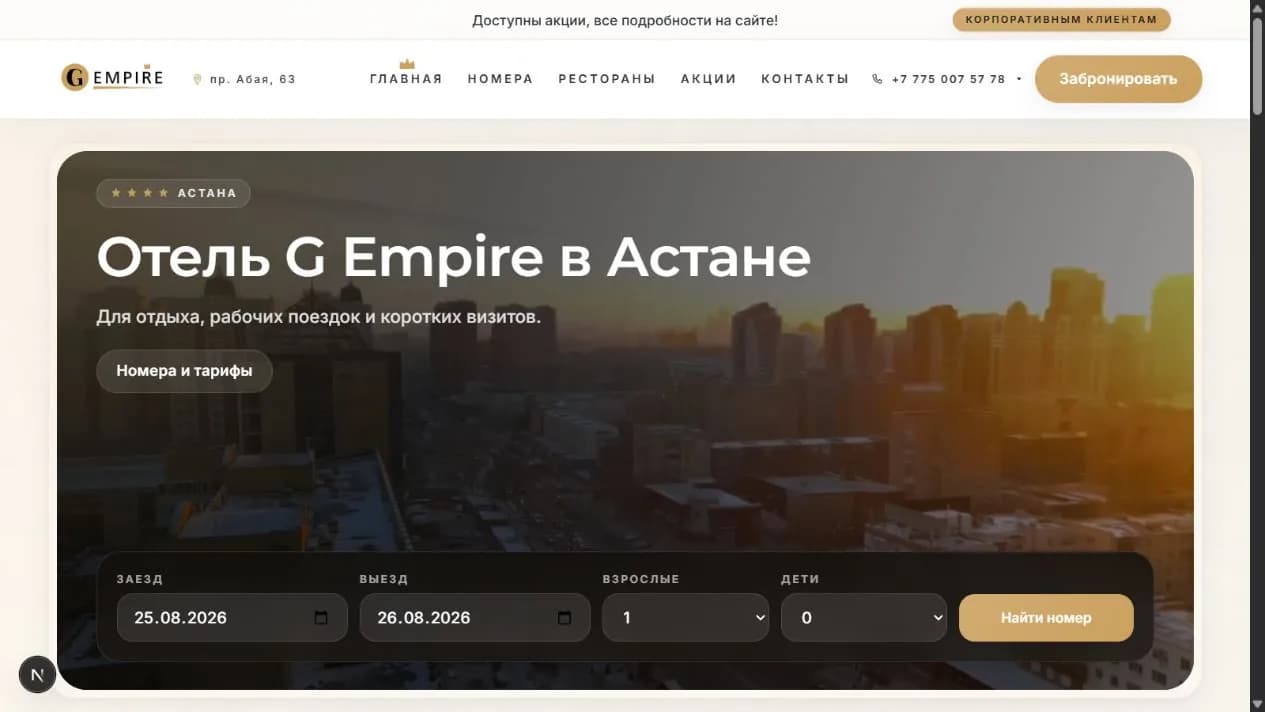
A customer path from discovering the hotel to choosing a room and booking directly.
The final scope depends on content, unique sections, interface complexity, functionality and analytics requirements.
The agreed scope can include traffic sources, CTA clicks, form submissions and messenger transitions. Later decisions should use real campaign and enquiry data.
For initial contact, name, phone and a short task are often enough. The right number of fields depends on the product and the level of lead qualification the business needs.
The format should match the business need. If another type of website creates more value, that should be decided before development starts.
A corporate website with dedicated service pages is usually a better fit.
An e-commerce website or structured catalogue is more appropriate.
A multi-page website with separate search entry points is usually more suitable.
A compact small business website may be enough.
The better first step may be fixing lead handling or another operational process.
We define scope, commercial terms and project boundaries before development, then move through clear stages to launch.
Understand the business context and what the page needs to change.
Agree the work, commercial scope and project boundary.
Prepare the structure, arguments and required materials.
Create the interface, mobile states and production page.
Check forms, links, events and key customer scenarios.
Publish the page and verify it in the working environment.
Refine the page later when real traffic and enquiry data are available.
The final scope depends on the offer, content, forms, analytics and any integrations. Price: from 249 000 ₸.
It is a strong fit when one campaign promotes one offer and the page has one main action such as an enquiry, call or message.
Yes. You provide the business facts, conditions and expertise, and we help turn them into a clear page structure and customer argument.
Yes, once the offer, page, analytics and campaign settings are aligned. Advertising setup itself is handled as a separate service.
Yes, when the required systems provide a supported integration method. The integration scope is agreed separately.
Yes, but if several services already need independent pages and SEO structure, it can be more efficient to start with a multi-page website.
Describe the service, product or campaign. We will determine whether a dedicated landing page is the right format and what the first useful scope should be.
KAMOZA is based in Astana and works with companies across Kazakhstan, in person or online.